“Don’t give up.. Don’t ever give up.”

Jimmy v

On March 4, 1993, Jim Valvano was awarded the inaugural Arthur Ashe Courage and Humanitarian Award at the first-ever ESPY Awards. 
Being a huge sports fan and the Espy’s airing on Wednesday I am going to take a few days to reflect on two of the bravest and most moving speeches I have heard.
One moving me and my daughter to tears, both of them making us reflect and motivating us.
Jimmy V gave one of the most memorable, poignant and humanized speeches I have ever heard. The V Foundation has awarded more than $130 million in research grants in 38 states and the District of Columbia.
It’s a little bit of a longer read, but well worth the few minutes it will take.
 

“I can’t tell you what an honor it is to even be mentioned in the same breath with Arthur Ashe. This is something I certainly will treasure forever. But, as it was said on the tape, and I also don’t have one of those things going with the cue cards, so I’m going to speak longer than anybody else has spoken tonight. That’s the way it goes. Time is very precious to me. I don’t know how much I have left, and I have some things that I would like to say. Hopefully, at the end, I will have said something that will be important to other people, too.

But, I can’t help it. Now I’m fighting cancer, everybody knows that. People ask me all the time about how you go through your life and how’s your day, and nothing is changed for me. As Dick said, I’m a very emotional and passionate man. I can’t help it. That’s being the son of Rocco and Angelina Valvano. It comes with the territory. We hug, we kiss, we love.

When people say to me how do you get through life or each day, it’s the same thing. To me, there are three things we all should do every day. We should do this every day of our lives. Number one is laugh. You should laugh every day. Number two is think. You should spend some time in thought. Number three is you should have your emotions moved to tears, could be happiness or joy. But think about it. If you laugh, you think and you cry, that’s a full day. That’s a heck of a day. You do that seven days a week, you’re going to have something special.

I rode on the plane up today with Mike Krzyzewski, my good friend and wonderful coach. People don’t realize he’s ten times a better person than he is a coach, and we know he’s a great coach. He’s meant a lot to me in these last five or six months with my battle. But when I look at Mike, I think, we competed against each other as players. I coached against him for 15 years, and I always have to think about what’s important in life to me are these three things. Where you started, where you are and where you’re going to be. Those are the three things that I try to do every day. When I think about getting up and giving a speech, I can’t help it. I have to remember the first speech I ever gave.

I was coaching at Rutgers University, that was my first job, oh that’s wonderful (reaction to applause), and I was the freshman coach. That’s when freshmen played on freshman teams, and I was so fired up about my first job. I see Lou Holtz here. Coach Holtz, who doesn’t like the very first job you had? The very first time you stood in the locker room to give a pep talk. That’s a special place, the locker room, for a coach to give a talk. So my idol as a coach was Vince Lombardi, and I read this book called Commitment To Excellence by Vince Lombardi. And in the book, Lombardi talked about the first time he spoke before his Green Bay Packers team in the locker room, and they were perennial losers. I’m reading this and Lombardi said he was thinking should it be a long talk, or a short talk? But he wanted it to be emotional, so it would be brief.

So here’s what I did. Normally you  get in the locker room, I don’t know, 25 minutes, a half hour before the team takes the field. You do your little x and o’s, and then you give the great Knute Rockne talk. We all do. Speech number 84. You pull them right out, you get ready. You get your squad ready. Well, this is the first one I ever gave, and I read this thing.

Lombardi, what he said was he didn’t go in, he waited. His team wondering, where is he? Where is this great coach? He’s not there. Ten minutes, he’s still not there. Three minutes before they could take the field, Lombardi comes in, bangs the door open, and I think you all remember what great presence he had, great presence. He walked in, and he walked back and forth, like this, just walked, staring at the players. He said, “All eyes on me.”

I’m reading this in this book. I’m getting this picture of Lombardi before his first game, and he said, “Gentlemen, we will be successful this year, if you can focus on three things, and three things only. Your family, your religion and the Green Bay Packers.” They knocked the walls down, and the rest was history.

I said, that’s beautiful. I’m going to do that. Your family, your religion and Rutgers basketball. That’s it. I had it. Listen, I’m 21 years old. The kids I’m coaching are 19, and I’m going to be the greatest coach in the world, the next Lombardi. I’m practicing outside of the locker room, and the managers tell me you got to go in. Not yet, not yet, family, religion, Rutgers Basketball. All eyes on me. I got it, I got it. Then finally he said, three minutes, I said fine. True story. I go to knock the doors open just like Lombardi. Boom! They don’t open. I almost broke my arm. Now I was down, the players were looking. Help the coach out, help him out. Now I did like Lombardi, I walked back and forth, and I was going like that with my arm getting the feeling back in it. Finally I said, “Gentlemen, all eyes on me.” These kids wanted to play, they’re 19. “Let’s go,” I said. “Gentlemen, we’ll be successful this year if you can focus on three things, and three things only. Your family, your religion and the Green Bay Packers,” I told them. I did that. I remember that. I remember where I came from.

It’s so important to know where you are. I know where I am right now. How do you go from where you are to where you want to be? I think you have to have an enthusiasm for life. You have to have a dream, a goal. You have to be willing to work for it.

I talked about my family; my family’s so important. People think I have courage. The courage in my family are my wife Pam, my three daughters, here, Nicole, Jamie, LeeAnn, my mom, who’s right here too. That screen is flashing up there 30 seconds like I care about that screen right now, huh? I got tumors all over my body. I’m worried about some guy in the back going 30 seconds? You got a lot, hey va fa napoli, buddy. You got a lot.

I just got one last thing; I urge all of you, all of you, to enjoy your life, the precious moments you have. To spend each day with some laughter and some thought, to get your emotions going. To be enthusiastic every day, and as Ralph Waldo Emerson said, “Nothing great could be accomplished without enthusiasm,” to keep your dreams alive in spite of problems whatever you have. The ability to be able to work hard for your dreams to come true, to become a reality.

Now I look at where I am now, and I know what I want to do. What I would like to be able to do is spend whatever time I have left and to give, and maybe, some hope to others. Arthur Ashe Foundation is a wonderful thing, and AIDS, the amount of money pouring in for AIDS is not enough, but is significant. But if I told you it’s ten times the amount that goes in for cancer research. I also told you that 500,000 people will die this year of cancer. I also tell you that one in every four will be afflicted with this disease, and yet somehow, we seem to have put it in a little bit of the background. I want to bring it back on the front table.

We need your help. I need your help. We need money for research. It may not save my life. It may save my children’s lives. It may save someone you love. And ESPN has been so kind to support me in this endeavor and allow me to announce tonight, that with ESPN’s support, which means what? Their money and their dollars and they’re helping me – we are starting The Jimmy V Foundation for Cancer Research. And its motto is “Don’t give up . . . Don’t ever give up.”

That’s what I’m going to try to do every minute that I have left. I will thank God for the day and the moment I have. If you see me, smile and give me a hug. That’s important to me too. But try if you can to support, whether it’s AIDS or the cancer foundation, so that someone else might survive, might prosper and might actually be cured of this dreaded disease. I can’t thank ESPN enough for allowing this to happen. I’m going to work as hard as I can for cancer research and hopefully, maybe, we’ll have some cures and some breakthroughs. I’d like to think, I’m going to fight my brains out to be back here again next year for the Arthur Ashe recipient. I want to give it next year!

I know, I gotta go, I gotta go; and I got one last thing, and I said it before, and I want to say it again. Cancer can take away all my physical abilities. It cannot touch my mind, it cannot touch my heart and it cannot touch my soul. And those three things are going to carry on forever.

I thank you, and God bless you all.”

Trivatech Group.

888-352-6563

www.trivatechgroup.com

Last mile technology.

router

Last-mile technology is any telecommunications technology that carries signals from the broad telecommunication backbone along the relatively short distance (hence, the “last mile”) to and from the home or business. Or to put it another way: the infrastructure at the neighborhood level.

Today, last-mile technologies include:

  • plain old telephone systems (POTS)
  • ISDN, a somewhat faster technology than regular phone service
  • Digital Subscriber Line (DSL) over existing telephone twisted pair lines
  • cable and the cable modem for data, using the same installed coaxial cable that already is used for television
  • wireless, including satellite services such as DirectTV
  • optical fiber and its transmission technologies.

In many communities, last-mile technology represents a major remaining challenge because the cost of providing high-speed, high-bandwidth services to individual subscribers in remote areas can be higher than the service provider would like. Laying wire and fiber optic cables is an expensive undertaking that can be environmentally demanding and require high maintenance. Experts hope that broadband wireless networks will eventually provide the solution and meet everyone’s needs.

Need help figuring out those needs?

Call Trivatech Group.

888-352-6563

www.trivatechgroup.com

Summer fun… How many can you do?

summer fun

Nostalgic-
See a movie at the drive-in
Walk on the boardwalk and listen to the boards creak under your feet
Blow bubbles
Play tag, hopscotch, or one of your favorite childhood games                                                    Ride a roller coaster
Play miniature golf
Win a prize at the fair
Catch fireflies at night
Build a sandcastle at the beach
Eat and Drink-
Eat a whole lobster with your hands
Pick berries and peaches at a farm
Buy a Creamsicle from the neighborhood ice cream truck
Roast marshmallows over a fire and make s’mores
Make lemonade from scratch
Eat corn on the cob
Sip a sweating glass of iced tea
Eat a slice of watermelon
Buy fresh produce at the farmers’ market
Mix up a pitcher of sangria
Eat a soft-serve vanilla ice cream cone with rainbow sprinkles
Dig your own clams
Have a barbecue
Relax-
Nap in a hammock
Have a picnic in the park
Sit on a porch swing
Stargaze while lying in the grass
Watch the sun set from a beach
Dangle your feet off a dock
Bring a blanket and lie on the grass at an outdoor concert
The Great Outdoors
Pick wildflowers
Swim in a lake
Rent a bike
Go fishing
Go camping
Play tennis
Go for a hike
Go kayaking or canoeing
Toss a Frisbee
Just Because-
Collect seashells at the beach
Take a last-minute road trip
See a summer blockbuster
Read a trashy novel
Walk barefoot in the grass
Get caught in a summer rainstorm
Sleep with the windows open
Make a summer playlist
Smell freshly-cut grass
Feel the sun on your back
Roll up your pant legs and go wading
Go to a baseball game
Sorry I am late.. Figured I would lighten the mood a little. Annabelle and I are checking more than a few off the list tomorrow. Should be a riot!! See how may you can do and have a blast doing em!!

Trivatech Group.

888-352-6563

www.trivatechgroup.com


realsimple.com

Verizon invests in connected cars..

Guessing this is what part of the frontier sale has gone to..

Verizon (NYSE:VZ) recently agreed to acquire Telogis, a developer of cloud-based telematics, compliance, and navigation systems used by major automakers like Ford (NYSE:F) and General Motors (NYSE:GM), as well as tech and telecom titans Apple and AT&T (NYSE:T).

The terms of the deal were undisclosed, but Telogis raised $126 million over seven rounds of funding since 2009. The company had reportedly been seeking funding which would have valued it at $1 billion prior to Verizon’s buyout offer. That could be a hefty premium — Telogis last revealed that it was generating about $100 million in annual revenues back in 2013. At the time, it told TechCrunch that it was profitable.


The acquisition helps Verizon expand into the connected cars market, which is booming thanks to rising demand for sophisticated navigation, infotainment, and driver assistance systems. It also helps Verizon gain a foothold in driverless cars, which will need to navigate autonomously across wireless networks. Verizon previously competed against Telogis with Verizon Telematics, which is used in 40 countries.

Why connected cars matter
Connected cars could account for 22% of all vehicles on the road by 2020, up from 10% in 2015, according to consulting firm McKinsey. Research firm PWC estimates that the value of the connected car market will grow at a compound annual growth rate rate of 29% between 2015 and 2020 to become a $125 billion market. Those connected vehicles could pave the way for fully autonomous vehicles to hit public roads within the next decade.

As a result, connected cars are now being considered the next big computing platform after smartphones. Chipmakers are rushing to create dedicated chips for infotainment and navigation systems, while Apple and Alphabet’s Google are battling to extend their mobile operating systems to cars with dashboard mirroring solutions.

For telcos like Verizon and AT&T, connected cars can diversify wireless service revenues away from the slower-growth smartphone subscriber and enterprise wireline businesses. The move also complements their growth into the Internet of Things, which provides connectivity to drones, wearables, home automation devices, and even entire smart cities.
Countering AT&T and Ford
Verizon’s acquisition of Telogis could help it counter AT&T’s faster growth in connected cars. AT&T has been connecting about a million cars per quarter, and recently inked a deal with Ford to connect more than 10 million cars in North America over the next five years with a platform called Ford SYNC Connect.

With that platform, vehicle owners can use an app to remotely lock and unlock their doors, access a built-in GPS system to locate their parked vehicle, remotely start their vehicle, and view key vehicle information like fuel, battery level, and tire pressure readings.


Buying Telogis enables Verizon to profit from AT&T and Ford’s connected car business, since both companies are Telogis customers. Ford’s rival GM is also a major investor in Telogis. It’s unclear how the acquisition will affect Telogis’ relationship with those companies, but it would probably be logical to maintain the status quo for now.

The future of connected cars
Verizon and AT&T both previously focused their in-house telematics efforts more on enterprise vehicle and fleet-tracking solutions. But both telcos are now clearly trying to expand their networks to reach as many vehicles, both old and new, as possible.

Last August, Verizon introduced Hum, a two-piece hardware system that connects any car manufactured since 1996 to Verizon’s network, and adds diagnostics and telematics functions which are tethered to a mobile app. Verizon claims that Hum can reach up to 150 million cars in the U.S. alone, and that it was a “large contributor” to the 176,000 connected gadgets (besides smartphone and tablets) that it added last quarter. AT&T introduced a less versatile product last September called Mobley, which converts any vehicle manufactured since 1996 into a Wi-Fi hotspot.

The key takeaway
Verizon’s acquisition of Telogis is expected to close in the second half of the year, so investors should keep an eye out for any new announcements regarding connected cars in the next few quarters. While the deal won’t likely move the needle for Verizon’s wireless business on its own, it could strengthen its non-smartphone businesses and widen its moat against AT&T.

www.trivatechgroup.com


the motley fool

Why the U.S. has fallen behind in internet speed..

internet flag

“Editor’s note: This analysis, first published last fall, is being resurfaced in light of the F.C.C.’s vote on Feb. 26 to regulate broadband Internet serviceas a public utility.

America’s slow and expensive Internet is more than just an annoyance for people trying to watch “Happy Gilmore” on Netflix. Largely a consequence of monopoly providers, the sluggish service could have long-term economic consequences for American competitiveness.

Downloading a high-definition movie takes about seven seconds in Seoul, Hong Kong, Tokyo, Zurich, Bucharest and Paris, and people pay as little as $30 a month for that connection. In Los Angeles, New York and Washington, downloading the same movie takes 1.4 minutes for people with the fastest Internet available, and they pay $300 a month for the privilege, according to The Cost of Connectivity, a report published Thursday by the New America Foundation’s Open Technology Institute.

The report compares Internet access in big American cities with access in Europe and Asia. Some surprising smaller American cities — Chattanooga, Tenn.; Kansas City (in both Kansas and Missouri); Lafayette, La.; and Bristol, Va. — tied for speed with the biggest cities abroad. In each, the high-speed Internet provider is not one of the big cable or phone companies that provide Internet to most of the United States, but a city-run network or start-up service.

The reason the United States lags many countries in both speed and affordability, according to people who study the issue, has nothing to do with technology. Instead, it is an economic policy problem — the lack of competition in the broadband industry.

“It’s just very simple economics,” said Tim Wu, a professor at Columbia Law School who studies antitrust and communications and was an adviser to the Federal Trade Commission. “The average market has one or two serious Internet providers, and they set their prices at monopoly or duopoly pricing.””

We can provide you choices that best suit your needs.

Trivatech Group

888-352-6563

www.trivatechgroup.com

nytimes.com

Frontier issues from L.A. to Tampa

A California legislative committee will hold hearings on problems former Verizon customers are having more than a month after their service was switched to Frontier Communications.

Frontier purchased Verizon’s FiOS and DSL businesses in California, Florida, and Texas, taking over the fiber and copper networks on April 1. Outages and various other service problems hit customers almost immediately, and Frontier still hasn’t solved all the problems.

Mike Gatto, a Democratic legislator from Los Angeles who is chairman of the California State Assembly’s Utilities & Commerce Committee, issued a statement yesterday about the “ongoing Frontier Communications telephone and Internet outages after the Verizon FiOS changeover.”

“There has been an alarming rate of telephone and Internet outages in Southern California and consumers are frustrated with the lack of a solution to this months-long ordeal,” Gatto said. “These problems need to be resolved swiftly. Cities are unable to live stream council meetings and residents are at risk because of the inability to dial 911 in an emergency. My committee will hold hearings on the impact on our constituents and the appropriate government response if these problems persist.”

We contacted a Frontier spokesperson yesterday about Gatto’s statement but haven’t heard back.

We’ve heard from a couple of customers about lengthy service outages. Clayton Gibson in Colleyville, Texas, told us he lost Internet and TV service for nearly a week  “Each night we are told a tech will arrive, only for them to not show,” Gibson told Ars last week when the outage was still ongoing.

It turned out that some unrelated construction work knocked out a FiOS line, according to Gibson. While that initial problem didn’t affect the Gibsons’ service, it did affect a neighbor—and the Gibsons subsequently lost service after Frontier fixed the neighbor’s connection. “A Frontier technician reconnected the line for our neighbor but in the process disconnected ours,” Gibson said. The problem was repaired last weekend.

Another Frontier customer in Los Angeles named Gary said he lost service for more than a week shortly after the Verizon/Frontier changeover. It turned out the problem was fixed with a factory reset of his modem, but Frontier employees couldn’t figure out what the problem was in a timely manner.

“On the first day after an hour and a half of troubleshooting, I was informed that I was part of an outage and service will be restored by Tuesday morning,” Gary told us while his service was still down. “The next day another supervisor told me I was not part of an outage and my service will be restored by the end of that day—both were wrong. Then I was told that they would dispatch somebody to my home who never arrived, I had supervisors tell me they would call me back and follow up with me and they never did, and on and on and on and on.”

We contacted Frontier about both cases but never received any further information.

NBC4 in Southern California had a report of an 83-year-old customer who says her phone service was out for a week. “On an oxygen tank 24 hours a day, [Marlene] Vernava said her landline is critical because it is connected to her medical alert system that tells family and doctors if something is wrong,” the report said. “The day after NBC4 investigated Vernava’s story, Frontier and Verizon technicians came out to fix the problem the next day.”

NBC4 said it also heard from “dozens” of former Verizon customers who had problems following the switch to Frontier.

Some say they wish Verizon had never sold to Frontier. “Our FiOS/Internet have been out 6 days w/ no end in sight. #bringbackverizon,” one customer tweeted yesterday.

The Frontier problems are similar to those that occurred late in 2014, when the company purchased AT&T wireline operations in Connecticut. Outages hit some for weeks in that case as well.

Still experiencing problems?

Trivatech Group

888-352-6563

www.trivatechgroup.com


Tampa Bay times


Excerpt from the letter from John to Abigail Adams

John adams

Excerpt from the letter from John Adams to his wife Abigail.
The celebration in him and how he described the celebrations that we still partake in today, but also so aware of the turmoil and work that was ahead to win and keep the Independence we celebrate today.
The final line is one of the most popular and poignant quotes in our countries history.

“But the Day is past. The Second Day of July 1776, will be the most memorable Epocha, in the History of America.—I am apt to believe that it will be celebrated, by succeeding Generations, as the great anniversary Festival. It ought to be commemorated, as the Day of Deliverance by solemn Acts of Devotion to God Almighty. It ought to be solemnized with Pomp and Parade, with Shews, Games, Sports, Guns, Bells, Bonfires and Illuminations from one End of this Continent to the other from this Time forward forever more.

You will think me transported with Enthusiasm but I am not.—I am well aware of the Toil and Blood and Treasure, that it will cost Us to maintain this Declaration, and support and defend these States.—Yet through all the Gloom I can see the Rays of ravishing Light and Glory. I can see that the End is more than worth all the Means. And that Posterity will tryumph in that Days Transaction, even altho We should rue it, which I trust in God We shall.”

As we have, we hope you enjoy a safe Independence Day shared with family and friends.

Trivatech Group
888-352-6563
http://www.trivatechgroup.com

Cloud or data center.. Whats the differnce

cloud data

Is a cloud a data center? Is a data center a cloud? Or are they two completely different things?

The terms “cloud” and “data center” may sound like interchangeable technical jargon or trendy buzz words referring to the same infrastructure, but the two computing systems have less in common than the fact that they both store data.

The Basics

The main difference between a cloud and a data center is that a cloud is an off-premise form of computing that stores data on the Internet, whereas a data center refers to on-premise hardware that stores data within an organization’s local network. While cloud services are outsourced to third-party cloud providers who perform all updates and ongoing maintenance, data centers are typically run by an in-house IT department.

[A Guide to Cloud Computing Terms]

Although both types of computing systems can store data, as a physical unit, only a data center can store servers and other equipment. As such, cloud service providers use data centers to house cloud services and cloud-based resources. For cloud-hosting purposes, vendors also often own multiple data centers in several geographic locations to safeguard data availability during outages and other data center failures.

For companies considering whether or not to use cloud computing versus staying with or building their own data center, there are three primary factors affecting their decision: their business needs, data security and system costs.

Does your business need a cloud or a data center?

A data center is ideal for companies that need a customized, dedicated system that gives them full control over their data and equipment. Since only the company will be using the infrastructure’s power, a data center is also more suitable for organizations that run many different types of applications and complex workloads. A data center, however, has limited capacity — once you build a data center, you will not be able to change the amount of storage and workload it can withstand without purchasing and installing more equipment.

On the other hand, a cloud system is scalable to your business needs. It has potentially unlimited capacity, based on your vendor’s offerings and service plans. One disadvantage of the cloud is that you will not have as much control as you would a data center, since a third party is managing the system. Furthermore, unless you have a private cloud within the company network, you will be sharing resources with other cloud users in your provider’s public cloud.

Cloud security vs. data center security

Because the cloud is an external form of computing, it may be less secure or take more work to secure than a data center. Unlike data centers, where you are responsible for your own security, you will be entrusting your data to a third-party provider that may or may not have the most up-to-date security certifications. If your cloud resides on several data centers in different locations, each location will also need the proper security measures.

A data center is also physically connected to a local network, which makes it easier to ensure that only those with company-approved credentials and equipment can access stored apps and information. The cloud, however, is accessible by anyone with the proper credentials anywhere that there is an Internet connection. This opens a wide array of entry and exit points, all of which need to be protected to make sure that data transmitted to and from these points are secure.

Cloud vs. data center costs

For most small businesses, the cloud is a more cost-effective option than a data center. Because you will be building an infrastructure from the ground up and will be responsible for your own maintenance and administration, a data center takes much longer to get started and can cost businesses $10 million to $25 million per year to operate.

Unlike a data center, cloud computing does not require time or capital to get up and running. Instead, most cloud providers offer a range of affordable subscription plans to meet your budget and scale the service to your performance needs. Whereas data centers take time to build, depending on your provider, cloud services are available for use almost immediately after registration.

Need to know more?

Trivatech group.

888-352-6563

www.trivatechgroup.com


Originally published on BusinessNewsDaily.


Things work best for those who..

john_wooden

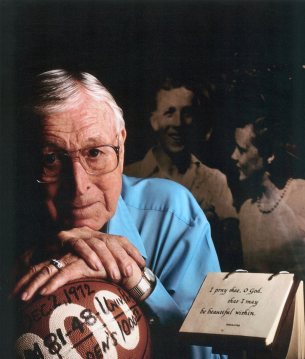
 Things work out best for those who make the best of how things work out. -John Wooden

Getting things accomplished is not always easy, and achieving success is definitely not a walk in the park… but believe it or not, some people defeat themselves before they even get started.Some people seem to place restrictions on themselves for one reason for another, and then wonder why success is so difficult to achieve! The truth is that if you hold yourself back with flawed expectations and place unnecessary restrictions on yourself and your situation, you are probably not going to reach the stars. Instead, you will probably find yourself struggling down towards the ground, trying desperately to gain some altitude before life passes you by.


Here are three huge lies that a lot of people tell themselves when it comes to success.Sometimes, you simply must dowhat you can with what you’ve got, and then trust yourself to deliver results that are going to take you toward a brighter future.


1… I can’t succeed because I don’t have what I need

Whether you need tools, equipment, a storefront, a desk, or even a car, making excuses for why you cannot achieve success in this fashion is very flawed. A lack of these things has never held back someone who was truly determined, and it can’t hold you back either. Find a way to make things work with what you have, and then continue to adapt and improve.


2… I can’t succeed because I do not have the knowledge

Again, thisis a lie that many people believe, despite the fact that it is not true.Information is essential to success, but youdon’t have to know everything to achieve your goals. We live in the Google age, after all! If you don’t know it, look it up online. If you need college classes, sign up for them and get them done. Whatever you do, though,don’t stop working towards your goals. Don’t give up!


3… I can’t succeed because I don’t have enough time

This is a big one, and everyone deals with it. Time is our most precious resource. Without it, you cannot do anything. And yet, it is the one thing that most people seem to undervalue more than anything else. If you feel like you don’t have time to achieve success, then it is time to try evaluating how you are spending your time. Could you possibly cut some things out and get an internship? Could you cutback on some of your expenses so that you can take an extra day off per week to work toward your long-term goals?


Success is a choice. So today, start doing what you can with what you’ve got, and get started on the road to building the life that you have always dreamed of living!

Let us help you make the best of your data and telecom!!

Trivatech Group

888-352-6563

www.trivatechgroup.com


Good and bad reasons to hire a consultant..

trivatech smaller

Wikipedia’s definition of a consultant..

A consultant (from Latin: consultare “to discuss”) is a professional who provides expert advice in a particular area such as security (electronic, or physical), management, education, accountancy, law, h.r, marketing, public relations, finance, and many other specialized fields.

A consultant is usually an expert or an experienced professional in a specific field and has a wide knowledge of the subject matter. The role of consultant outside the medical sphere (where the term is used specifically for a grade of doctor) can fall under one of two general categories. Internal, and External.

Good Reasons to Hire an External Consultant

  1. The organization has limited or no expertise in the area of need, for example, to develop a new product or program for customers and clients.
  2. The time of need is short-term, for example, less than a year, so it may not be worth hiring a full-time, permanent staff member.
  3. The organization’s previous attempts to meet its own needs were not successful, for example, the organization developed a Strategic Plan that was never implemented.
  4. Organization members continue to disagree about how to meet the need and, thus, bring in a consultant to provide expertise or facilitation skills to come to consensus.
  5. Leaders want an objective perspective from someone without strong biases about the organization’s past and current issues.
  6. A consultant can do the work that no one else wants to do, for example, historical data entry.  (Some would argue that this is not really a consulting project.)
  7. A funder or other key stakeholder demands that a consultant be brought in to help further develop the organization.

Poor Reasons to Hire External Consultants

The following reasons are likely open to disagreement – some people would argue that some or all of the following are good reasons to hire a consultant.

  1. The organization wants a consultant to lend credibility to a decision that has already been made, for example, the Board of Directors has decided to reorganize the nonprofit, but the Chief Executive Officer disagrees – so the Board hires a consultant to lend expert credibility to their decision.  Many consultants might consider this reason to hire a consultant unethical.
  2. A supervisor does not want to directly address a problem of poor performance with one of the employees, so the supervisor hires a consultant to do the job that the employee should be doing.  This is an irresponsible action on the part of the supervisor.
  3. The organization does not want to pay benefits (vacation pay, holiday pay, pension, etc.) or go through the administrative processes to withhold payroll taxes (social security taxes, federal taxes, etc.) for a position — a position that seems consistent and long-term, e.g., longer than a year or more —  so the organization hires a consultant.  This reason for hiring a consultant is likely to be illegal and could result in the organization paying fines and penalties to the appropriate government agency.  The organization should proactively contact the IRS to discuss this situation.

Might seem odd for a Consulting Company to put reasons not to hire them on their website.. Pros and cons, good and bad to steer you and your company in the right direction to make the best possible decision possible. Isn’t that what a Consulting Company is supposed to do?

Trivatech Group

888-352-6563

www.trivatechgroup.com


managementhelp.org